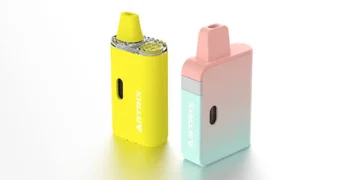

Disposable vapes keep getting bigger, and the jump from 2 grams to 3 grams sounds like a straightforward upgrade. More product for a slightly higher price seems obvious on paper. But 2 gram THC cartridges still outsell their 3-gram counterparts in a lot of shops, and that’s not just habit. There are real tradeoffs buried in that extra gram that don’t show up until you’ve actually used both.
Do you actually get more value with 3g?
People are surprised that it isn’t always the case. Disposables cost more per gram than 2-gram, but rarely double on paper. Most 3-gram disposables use the same battery and heating element as the 2-gram version, but will burn 50% more oil. Battery oil runs out before the battery dies. The battery gives out on many 3-gram disposables, so they end up tossing them. That means that the per-gram savings disappear entirely, and you end up paying more for less product than with the smaller cartridge.
Does more oil mean more hits?
Though technically yes, the ratio isn’t as generous as the label suggests. Due to the specific battery size, 2-gram carts generally deliver consistent hit-to-battery-life ratios. You have to hope that the company has actually upgraded the internals, not just the tank size, to handle 3 grams with the same battery architecture.
Cheaper 3-gram disposables frequently skip that upgrade. The battery capacity stays close to what a 2-gram device uses, just crammed into a bigger shell with more oil sitting on top. That’s the exact scenario that leads to dead batteries with leftover oil, and it’s more common in budget brands chasing the “bigger number, higher perceived value” marketing angle than in ones actually engineering for it.
Which one actually makes more sense to buy?
Depends on how you use it. Heavy daily users who go through oil fast enough to drain the battery before it dies are the ones who actually benefit from 3-gram disposables. If your usage pace matches the device’s battery life, you get real value out of the bigger tank.
Casual or occasional users tend to do better with 2-gram carts. Slower consumption means the battery has more time to fail relative to how much oil is left, and a smaller device is just easier to carry and replace without wasting product. Buying two 2-gram disposables spread over time often ends up being more reliable than betting on one 3-gram device lasting through its entire oil supply. Price also plays a role that most people underestimate. A 3-gram disposable at a modest markup over a 2-gram one only makes sense if you’re confident the battery will actually keep pace. Ask a budtender about return rates or battery complaints on a specific 3-gram product before assuming bigger automatically means better.
The gram count on the label isn’t the full story. Battery engineering underneath that number matters just as much, arguably more, since a bigger tank paired with an undersized battery means paying extra for oil you’ll never actually vape. Before grabbing the bigger disposable off the shelf, it’s worth checking whether the brand actually built the internals to match, or just stretched a tank and called it an upgrade.