
For people who would otherwise be guaranteed a lifetime of medical and cosmetic issues, braces can produce amazing outcomes. It is no wonder people are interested in the biomechanics of braces.
Metal dental braces have been straightening teeth for decades by exerting careful pressure to align teeth so they form their expected shapes. Envisaging orthodontic treatment? At Westfall Orthodontics, they ensure personalized braces plans to suit patients of all ages.
How do braces work magic? Let us decode it step by step.
The Science Behind Braces
The braces apply gentle and consistent force on teeth, and this stimulates teeth to move slowly.
This is what goes on behind the scenes:
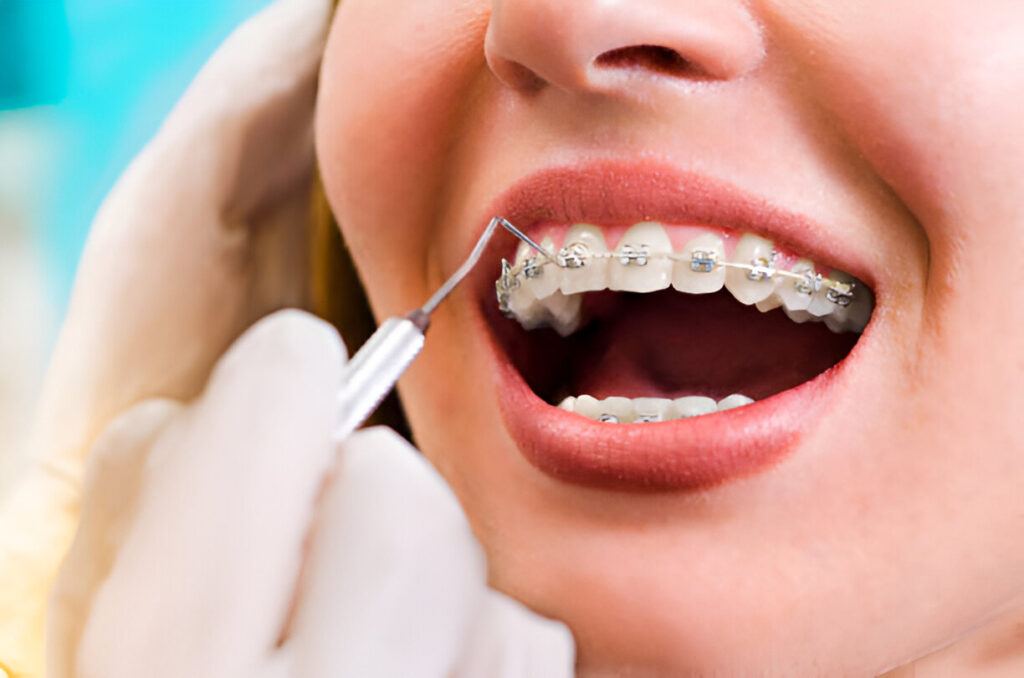
- Brackets & wires – Braces are tiny brackets fixed to teeth and linked using an arch-wire that directs movements.
- Bone remodeling – Teeth do not move in isolation, and so the surrounding bone changes to accommodate the teeth by dissolving on one side and reconstructing on the other.
- Ligament flexibility – Each of the periodontal ligaments compresses and stretches and making it possible to place teeth precisely.
Common Problems Braces Fix
Braces are not just for crooked teeth—they address multiple alignment issues:
- Overcrowding – Shifts teeth to create proper spacing.
- Overbites/Underbites – This brings the upper and lower jaws into a better position to work.
- Gaps & rotations – Closes spaces and straightens twisted teeth.
The Step-by-Step Treatment Process
The process of orthodontics moves in a logical direction:
1. Alignment Phase
- Teeth are straightened into proper arch formation.
- May involve expanders or extractions if space is limited.
2. Bite Correction
- Adjusts jaw positioning for ideal tooth fit.
- Rubber bands or springs may assist in movement.
3. Final Detailing
- Refines tooth positioning for a polished smile.
- Ensures even spacing and proper occlusion.
How Long Do Braces Take?
Depending on the complexity, treatment can be of any length:
- Minor adjustments – As little as 6 months.
- Moderate cases – 12-24 months on average.
- Severe corrections – Up to 3 years for extensive realignment.
Consistency is key—broken brackets or missed appointments can prolong treatment.
Modern Brace Options
Though conventional metal dental braces are very effective as well, there are a few alternatives too:
- Ceramic braces – Not so apparent, however, a little more vulnerable.
- Lingual braces – Hidden between the teeth for the discreet treatment.
- Clear aligners – In mild to moderate cases, removable trays are used.
Life With Braces
Some modifications help smooth out the process:
- Soft foods initially – Stay away from hard, sticky, or crunchy foods.
- Meticulous cleaning – Brackets are made plaque-free by special brushes/floss.
- Regular checkups – The key is to make proper, timely adjustments.
Why Choose an Expert Orthodontist?
Accuracy is the key- uncontrolled force may break roots or take a long time before showing effects. At Westfall Orthodontics, the expert use of technology is blended with a personal touch in order to achieve the delivery of efficient and comfortable treatment.
Final Thoughts
Braces are technology, art, and science, faithfully designed to bring healthier, more beautiful smiles. The choice is yours: classic metal or a discreet option, but the outcome will be the same: a flawlessly aligned smile.